
Do MORI
VENICE

Inside Cantina do Mori
One of CASANOVA'S Favorite Bars

The Bar at Do MORI
VENICE

Giacamo Casanova

The Good Time roll out onto the Street
At Do MORI

Typical Cichetti at Do Mori
Panini, Baccale Mantecate, Mussetto and ???

SPAGHETTI con GAMBERONI
Do MORI

Caffe Florian
Piazza San Marco
VENICE
Since 1720
Caffe Florian's was a favorite of Giacomo Casanova where he began many a Seduction over the years. Caffe Florian opened its door in 1720 and has been serving the citizens of Venice and the World ever since.
Caffe Florian has seen the likes of : Napoleon Boanaparte, Winston Churchill, Maria Callas, Aristotle Onassis, Jackie Kennedy, George Clooney, Jude Law, Gwyneth Palthrow, Matt Damon, Ernest Hemingway, Kings, Queens, Princes & Princesses, US Presidents, Heads of State, writers, artist, Film Makers, Movie Stars, tourists, and the people of the World in its almost 300 years of operation, serving, Espresso, Cappuccino (Coffee), Wine, Tea, Prosecco, Campari Aperol, Sndwiches, and Sweet Treats. Have you been there? Casanova has, and if you haven't been, no trip to Venice is complete without at least one or more visits to this historical spot.

Do SPADE
"Drink where CASANOVA Drank"
Calle Spade, San Polo, Venice
One of the most ancient Venetian osterie, the Cantina Do Spade is only a few steps away from the Rialto Bridge. This Bacaro offers a variety of cicheti: small typically Venetian snacks like fried squid rings, Meatballs, Mozzarella in Carrozza, Baccala Mantecato etc. Friendly staff and atmosphere will make you feel at home, but with the opportunity to taste fine and fresh food.

Inside Do SPADE
VENICE

Trattoria Poste Vecie
A 500 Year Old Restaurant where Casanova dined at !
In the fish market area, in Campo delle Beccarie, there is Trattoria Poste Vecie, a restaurant opened since 1500, where Casanova used to hide away with friends and especially girl friends to enjoy luxurious banquets. The whole area of St. Mark’s Square and especially the old premises, starting from Caffè Florian, have been hunting grounds of the great seducer.

Inside TRATTORIA POSTE VECIE

The Entrance to Trattoria Poste Vecie
Adress : SAN POLO 1680
at The RIALTO MARKET

HOTELS in VENICE
And WORLDWIDE

Have an Ombra
Drink Wine where CASANOVA used to Drink


The FEAST of The SEVEN FISHES
"ITALIAN CHRISTMAS"

VENETIAN SEAFOOD RECIPES
In The FEAST of The 7 FISH

CICHETTI and WINE
At CANTINA DO MORI
VENICE
ITALY

Experience Italian opera in a new way as you watch a performance in a historic building on the Grand Canal. Enjoy each part of the show set in a different hall in one of the most fascinating Venetian palaces, the Palazzo Barbarigo Minotto.

Sophia Loren
For ITALIAN CHRISTMAS "The FEAST of The 7 FISHES"
LENT and ALL YEAR ROUND
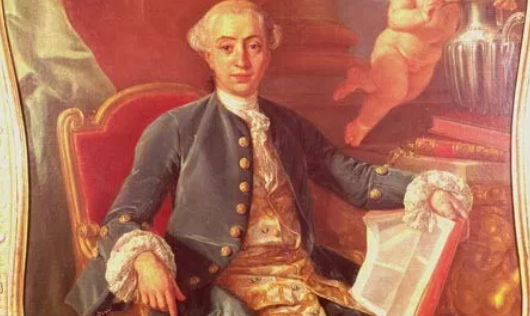
Giacomo Casanova
Giacomo Casanova
(1724 – 1798)
Giacomo Casanova was born in Venice on 2 April 1725, the eldest son of a Spaniard Gaetan-Joseph-Jacques Casanova and his Italian wife Zanetti Farusi, both actors. His father died when he was around nine or ten and his mother continued traveling with her acting troupe, leaving her six young children as always with their maternal grandmother Marzia Farusi; Casanova and his siblings don’t seem to have had much of a relationship with their mother then or later in life. Casanova describes himself as having being ‘a vegetable’ until the age of eight, by which we should infer nothing much interesting or eventful happened in his early growing years. However he did begin his education and showed himself to be an unusually bright young fellow. Not bright enough to have developed a complete understanding of himself as yet though. His first choice of a career, funnily enough, was Priesthood – even in an era when nobody was particularly chaste or saintly, he would have been a real disaster in that role. Fortunately for him, his roving eye ruined this prospect before it even began and, never the one to be cast down by anything for very long, he shrugged, studied Law instead, and let himself loose on the secular world next.
For the rest of his life, Casanova was to remain, what can only be described as, a Jack of all Trades – and Master enough of himself to get out of all the sticky situations that these Trades invariably got him into. He developed into a real tolerant, open-minded individual – he usually refrained from pointing fingers at other people’s morals and never hesitated in giving them plenty of reasons to be sniping about his in turn – if they sniped too much and too loud, he was always forward in inviting them to duel – and he was rarely the one to be carried off the field with many wounds to lick. He made time for practically all the fools he came across – to fleece them for all they were worth – and for most of the women and girls that crossed his path. He nearly married on several occasions, but last minute escapes prevailed every time. On one occasion he almost married his own illegitimate daughter – he had several illegitimate children that he either never heard of or came to hear of, like on this occasion, a mite later in life. Certainly though, he never worried his head too much about them. But then he wasn’t prone to worrying too much about anything. This perhaps was the main ingredient of his carefree existence. If one thing doesn’t work, well, never mind, let’s move on to something else, let’s see what’s around the next bend. And if it was necessary to bend a bit to get around the bend, hey, no problemo whatsoevero, in this life of ours some adjustment is always necessary.
Casanova’s talent for adjustment saw him traveling widely – Florence, Italy, Spain, Russia, Poland, Germany, England, France, Switzerland, Holland, Belgium, Austria, Turkey – and coming into contact with a wide spectrum of society, from peasant-folk to city thugs to ordinary middle-class people to the very rich and affluent to the aristocrats and royalty. He had close social contacts with the King of France, with Catherine The Great of Russia, with George III of England, with Frederick The Great of Prussia, with Joseph II of Austria, with Benedict XII in Rome, with the French thinkers Voltaire, Rousseau, d’Alembert, Crebillon, and many other eminent personalities of the day. He also found himself a prisoner of the Inquisition in Venice’s notorious Piombi prison for 15 months – for expressing his personal opinions on religion and morality a little too publicly – he would probably have languished there forever except for his irrepressible spirit – after one failed bid to escape, he tried again and his hair-raising second attempt was a success. Unlike one of our modern heroes, Casanova doesn’t appear to have suffered from much post traumatic stress as a result of this ordeal. He dusted himself off and coolly went back to the business of living. He always took care to live particularly well, with good food, clothes, and lodging. He made a great deal of money from his various schemes and lost it all rather quickly. The concept of saving was just beyond him.
Some twenty years later, needing money, he was back in Venice, opportunistically seeking employment with the very people that had once arrested him. It seems they were as prepared to be forgiving and he worked for them as a Secret Agent from 1774 to 1782. Then he left Venice for the last time and went to Paris. Here he met Count Waldstein who invited him to come live on his property, the Chateau Dux, in Bohemia and work there as a Librarian. Quite a career change, but perhaps a little peace and quiet was just what Casanova was looking for. He accepted and spent the next fourteen years at Dux.
It wasn’t demanding work and gave him ample time for intellectual pursuits of his own – aside from his memoirs, on which he worked diligently, he wrote on Mathematics, Philosophy, Grammar, Poetry, Short Stories, Plays, and so on. He also maintained a voluminous correspondence with friends, acquaintances, and former lovers. Age didn’t in any way diminish his general enthusiasm. Just prior to his death – on 4 June 1798 – he was described by the Prince de Ligny as: “At 73, no longer a god in the garden or a satyr in the forest, he is a wolf at table.”

STORIES of ITALIAN FOOD
In ITALY
NEW YORK
POSITANO
And ???

GREAT HOTELS in VENICE
All ITALY - EUROPE - WORLDWIDE
.
.


